Squat and carry3 min read
A bodyweight squat can be a useful movement lesson before resistance is added. The task is to understand the start, lowering and return in a version appropriate to you. This guide gives observations to discuss with a qualified instructor rather than a universal depth target or a repetition challenge.
Read the guide ↗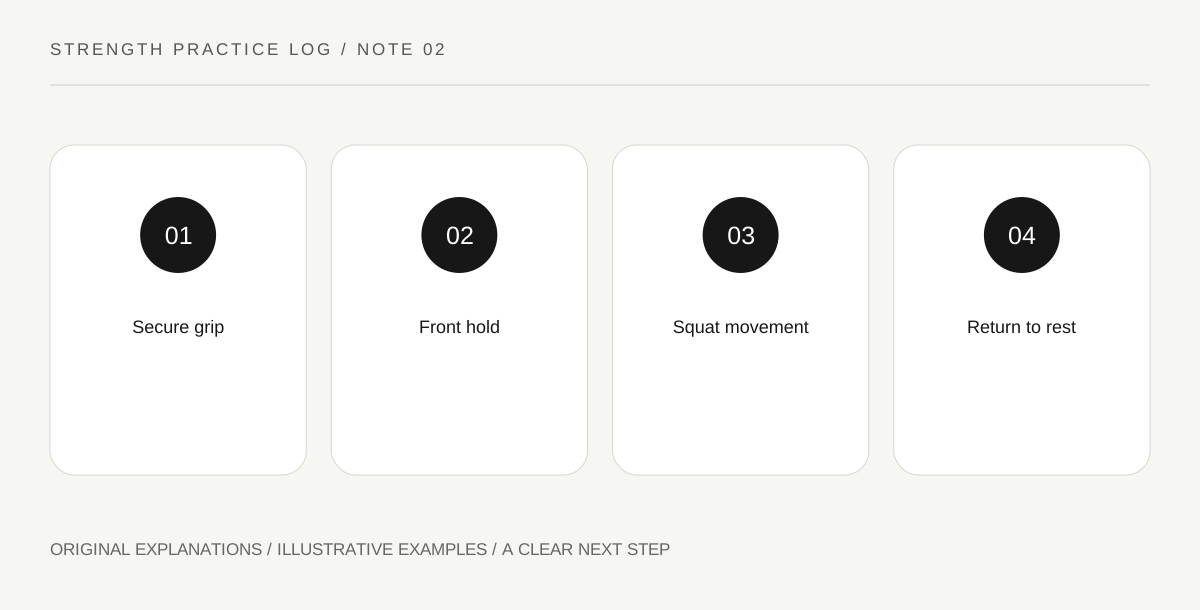
Squat and carry3 min read
A goblet squat places resistance in front of the torso, so holding and controlling that object is part of the exercise. Learn the grip and movement together with appropriate instruction. This guide does not choose a weight or assume that a front-held load makes every squat suitable for every person.
Read the guide ↗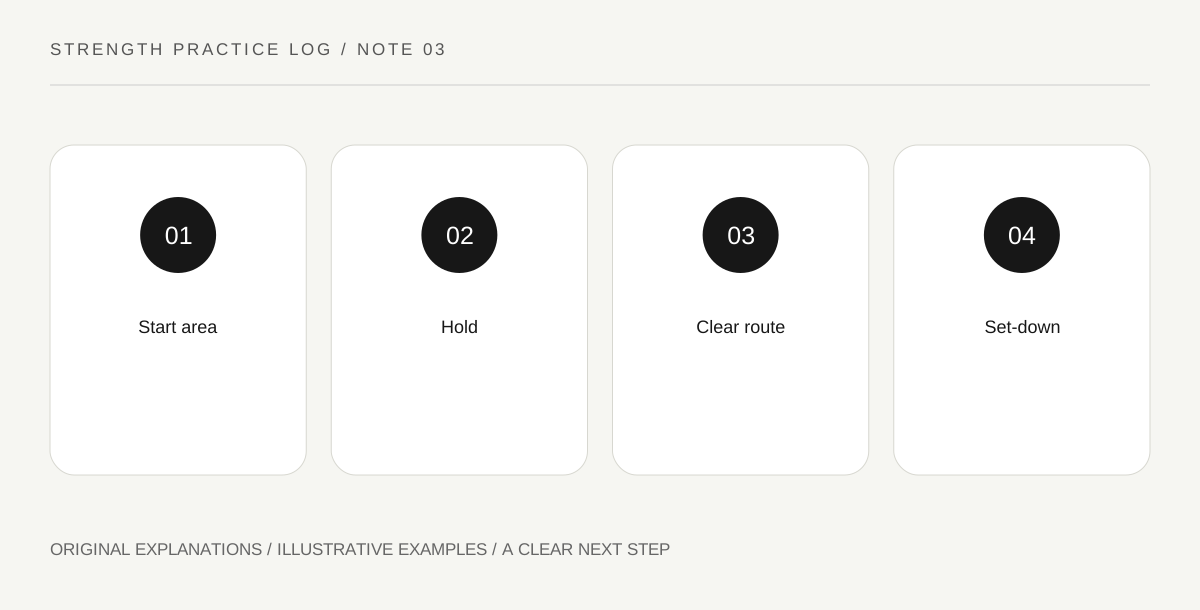
Squat and carry3 min read
A farmer carry combines holding resistance with walking, so the route and set-down matter as much as the distance. Learn it with suitable instruction and an appropriate load. This guide focuses on the complete carrying task rather than a challenge to move the heaviest possible objects.
Read the guide ↗
Press and pull3 min read
An incline push-up raises the hands while keeping a pressing pattern. The hand surface is part of the exercise setup, so it must be appropriate and stable. Learn the version with qualified instruction rather than copying a height from a photograph or using furniture that can move.
Read the guide ↗
Press and pull3 min read
A bent-knee push-up uses knee support while preserving a pressing task through the upper body. The movement is more specific than simply lowering the chest however possible. This guide focuses on the supported body line and controlled return, with an appropriate version selected through instruction.
Read the guide ↗
Trunk practice3 min read
The dead bug combines lying on the back with controlled limb movement. The challenge is not to reach as far as a photograph shows, but to keep the instructed trunk position while the limbs move. Learn an appropriate version with a qualified instructor before treating it as a timed endurance task.
Read the guide ↗
Trunk practice3 min read
The bird dog begins on hands and knees and commonly extends an opposite arm and leg. The useful task is controlled limb movement around a steady torso. This guide focuses on support, coordination and the return, using a version appropriate to the learner rather than a balance spectacle.
Read the guide ↗
Machine movements3 min read
A calf-raise machine asks for a controlled movement at the ankle within a particular support arrangement. The visible rise of the whole body is only part of what happens. Learn the actual machine with qualified instruction and keep the foot contact, movement and return clear in your notes.
Read the guide ↗
Machine movements3 min read
A glute-press machine uses a supported position and a rearward leg action. The pad and platform are part of that particular design. Learn the machine before moving the resistance, then observe whether the intended leg action remains distinct from a large shift of the torso.
Read the guide ↗
Machine movements3 min read
A lying hamstring curl uses a supported body position while the knees bend against resistance. The roller and joint relationship need to match the actual machine. This guide focuses on understanding that movement and its return, not on prescribing a load or using the exercise to diagnose pain.
Read the guide ↗
Machine movements3 min read
A seated biceps-curl machine places the arms against a support so the elbows can bend along its designed path. Learn the relationship between the seat, pad and machine pivot before the handle moves. A setting number becomes meaningful only when you can also describe that relationship.
Read the guide ↗
Machine movements3 min read
A seated chest press provides a backrest and handles for a forward pressing movement. That support should remain part of the exercise throughout the press. Learn the device’s fit and starting position before treating the handle path as a test of how far or heavily you can push.
Read the guide ↗
Machine movements3 min read
A supported high-back row has a particular handle height and elbow path. It should be identified separately from a low cable row or a free-standing bent-over row. Use the chest pad to understand what stays supported while the arms pull on the actual machine.
Read the guide ↗
Press and pull3 min read
The hammer curl is recognizable by its neutral hand orientation, with the palms facing inward toward the body. Learning that orientation, the elbow movement and the return gives a clearer task than simply lifting a dumbbell toward the shoulder. Choose suitable resistance through appropriate instruction.
Read the guide ↗
Press and pull3 min read
An incline reverse fly uses chest support while the arms move outward. It can look similar to a supported row from a distance, but the elbow action and direction differ. Learn the bench arrangement and suitable range with an instructor before adding challenge to the movement.
Read the guide ↗
Press and pull3 min read
A dumbbell front raise moves the arms forward from their starting position. The long arm path makes changes in wrist, elbow and torso position easy to overlook. Learn a suitable version with qualified instruction and use the notebook to distinguish those actions instead of judging the exercise by height alone.
Read the guide ↗
Machine movements3 min read
A lateral-raise machine may transmit the movement through pads near the elbows rather than through a dumbbell held in each hand. Learn how the actual device is meant to contact the arms. Its seat, pad and start arrangement determine what the exercise asks you to move.
Read the guide ↗
Trunk practice3 min read
A resisted ankle-flexion exercise asks the foot to move toward the shin while the rest of the leg remains arranged as instructed. It is a specific exercise to learn, not a home test for an injury. Use a suitable setup and professional guidance where the movement or its purpose is unfamiliar.
Read the guide ↗
Trunk practice3 min read
Prone limb raises use a face-down support position while an arm, a leg or an opposite pair moves. ACE describes several versions, so the exact task needs a name. Learn an appropriate version and distinguish the limb action from lifting the head or arching the entire torso.
Read the guide ↗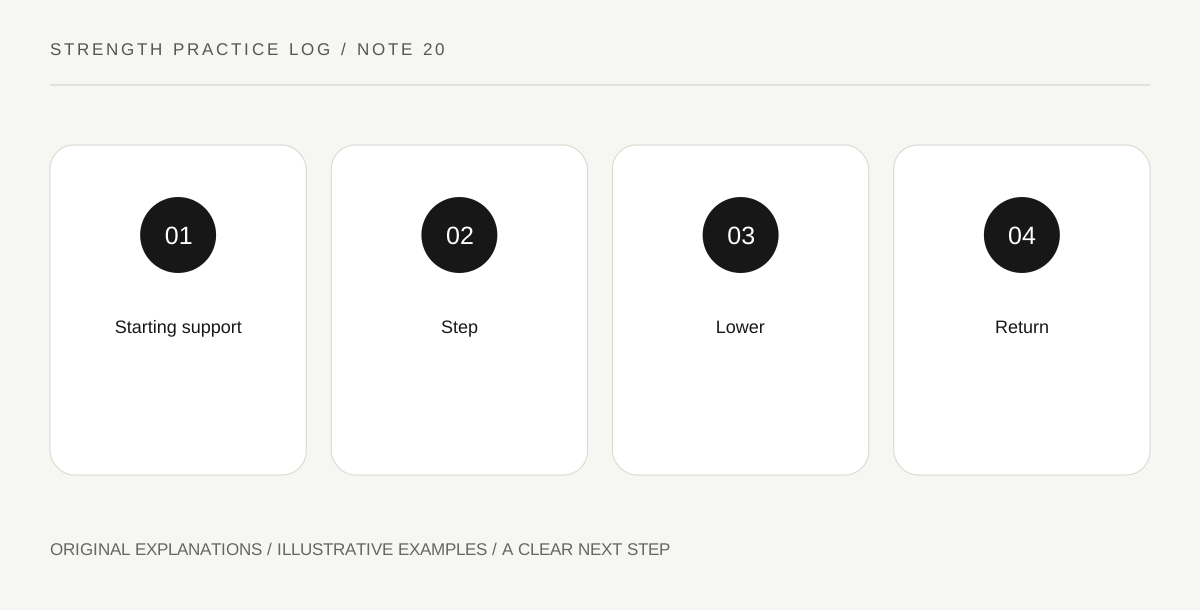
Squat and carry3 min read
A forward lunge combines balance, a step and a controlled lowering action before returning to standing. Those phases can become blurred when the movement is rushed. Learn a suitable unweighted version with qualified instruction and separate the phases so the next question can address a specific action.
Read the guide ↗