Read a calf-raise machine through ankle movement
A calf-raise machine asks for a controlled movement at the ankle within a particular support arrangement. The visible rise of the whole body is only part of what happens. Learn the actual machine with qualified instruction and keep the foot contact, movement and return clear in your notes.
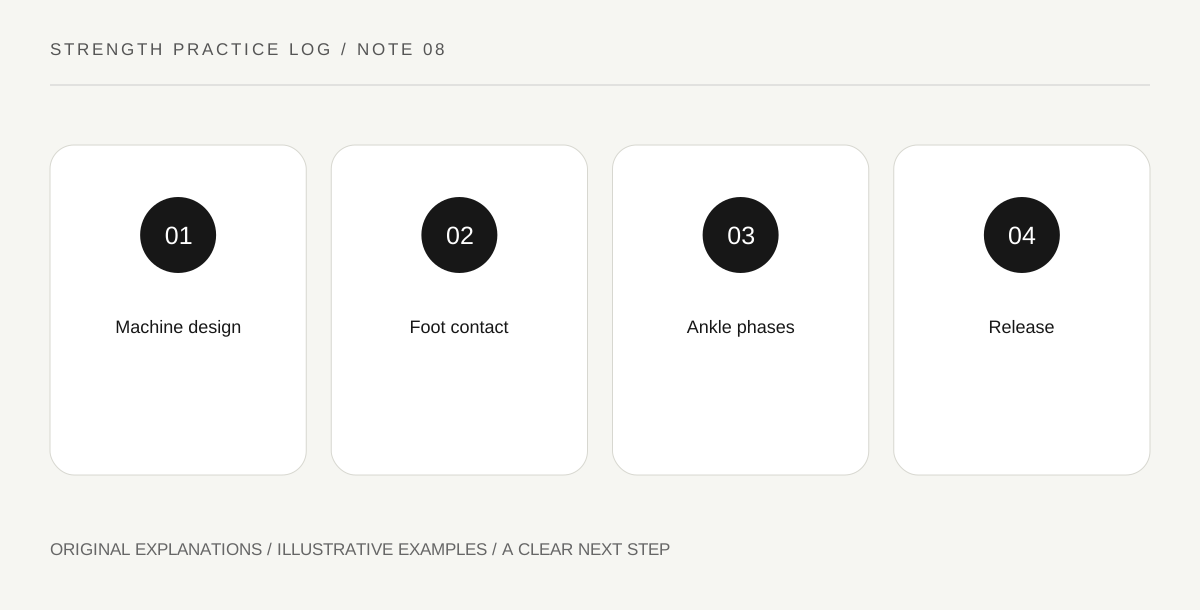
Original explanatory diagram. Read the full method and limitations below.
Identify the machine's support design
Different calf-raise machines use different seated or standing arrangements. ACE's reference describes one machine exercise, not every device that shares the name. Ask staff to identify the intended contact points, release mechanism and starting position on the actual equipment. Do not transfer a setting from another machine automatically. The support design changes what you must manage before the ankle movement can be practised. Identify the release before positioning yourself under any resistance.
Locate the intended foot contact
Use the platform and foot placement demonstrated for that machine. The contact should remain secure through the selected movement. Avoid copying an exaggerated heel drop from a video or standing on an unverified edge to create more range. Ask the instructor where the appropriate range begins and ends for you. A larger movement is not automatically a better lesson, especially when it changes the support or produces discomfort.
Distinguish ankle action from body bouncing
The exercise should not become a repeated bounce that uses the machine or knees in an unintended way. Observe whether you can describe the rise and controlled lowering as separate phases. Follow the instructor's pace and selected resistance. The point is not to produce a dramatic visible lift at any cost. If the device's motion or your position is unclear, stop and obtain another demonstration before adding challenge.
Record the return and release
Finishing includes returning the machine to its appropriate resting state and using its release or exit method as taught. Do not step out while resistance remains unsupported or assume the end of a repetition means the equipment is ready to leave. A useful note names the machine type, foot-contact arrangement and the phase you want clarified. Those details make the next visit more reconstructable than a calf-raise number without context.
Illustrative worked example
Illustrative machine lesson: A beginner learns a standing calf-raise device with staff guidance. He records the proper support and exit method, then notices that he tends to bounce near the bottom. He asks about controlling that phase rather than seeking a deeper drop. At another gym, he requests a fresh demonstration because the machine is a different design. The example gives no resistance, repetition target or rehabilitation claim.
Questions that come up
Are seated and standing calf-raise settings interchangeable?
No. They use different equipment arrangements. Treat a new design as a new setup rather than copying a remembered setting.
Should I bounce to obtain more repetitions?
That changes the intended controlled task. Follow the appropriate instructed movement rather than using momentum to finish an arbitrary count.
References and scope
These sources support the factual background. Examples and exercises are original illustrative teaching material. References do not imply endorsement.
- ACE Calf Raise — Machine calf raise and controlled ankle movement.