Separate knee bending from body movement in a lying hamstring curl
A lying hamstring curl uses a supported body position while the knees bend against resistance. The roller and joint relationship need to match the actual machine. This guide focuses on understanding that movement and its return, not on prescribing a load or using the exercise to diagnose pain.
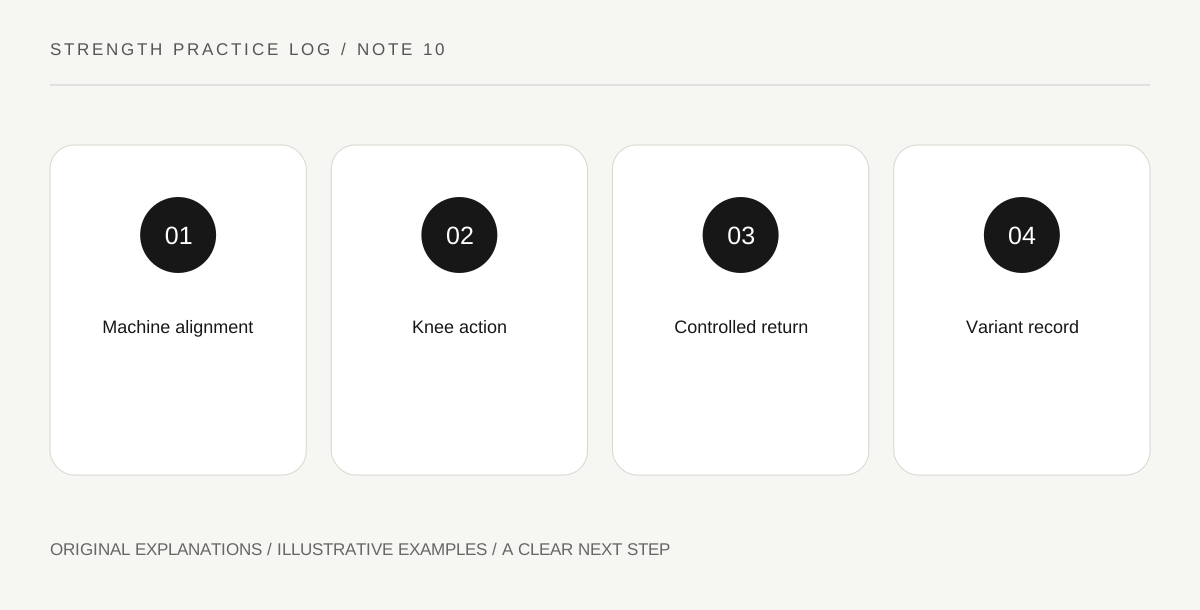
Original explanatory diagram. Read the full method and limitations below.
Learn the machine's alignment cues
Ask staff to demonstrate how the body, knee area and roller should relate on the specific device. Different machines can have different adjustments and starting mechanisms. Do not copy another user's settings simply because their height appears similar. The useful note names the alignment and contact points you were shown. If the position cannot be made comfortable or suitable, ask about another appropriate option rather than forcing the body into the machine's path.
Keep the supported body distinct from the moving lower leg
The exercise bends the knees while the body remains supported in the instructed arrangement. Observe whether you can identify that action without lifting or shifting the torso to move the roller. A large visible movement can conceal a change in the task. Describe the phase to the instructor in ordinary terms rather than assuming a particular muscle is failing or that discomfort is a required sign of useful effort.
Control the return through the selected range
Letting the resistance pull the legs back abruptly changes the lowering task. Follow the instructed pace and range, returning deliberately without chasing an extreme endpoint. Ask what the machine's resting position should be before the next repetition or before leaving. The lesson includes managing the return, not only pulling the roller toward the body. A smaller appropriate practice can make that phase clearer than a heavier attempt completed with a sudden release.
Record the machine and the phase question
Write lying hamstring curl rather than a generic leg-machine entry, along with the relevant setup details. If you later use a seated curl, name it separately because the support arrangement differs. Keep any symptom that needs attention distinct from an ordinary technique question and obtain appropriate help. The notebook should support a qualified conversation about the movement, not become a homemade injury assessment or a reason to train through pain.
Illustrative worked example
Illustrative note: A beginner understands the curl toward the body but allows the return to happen too quickly. He records that specific phase and asks for another demonstration of the controlled return on the same machine. He does not compare the number directly with a seated device used elsewhere. The example identifies a learning task without setting resistance, repetitions, timing or a rehabilitation target for another reader.
Questions that come up
Is a seated curl the same notebook entry?
Use a separate variant name. The support and starting arrangement differ, so a number alone does not make the two tasks identical.
Should I force the roller closer for more benefit?
No. Use the appropriate instructed range. A farther endpoint is not automatically useful if it changes position, control or comfort.
References and scope
These sources support the factual background. Examples and exercises are original illustrative teaching material. References do not imply endorsement.
- ACE Lying Hamstrings Curl — Prone machine knee-flexion movement.