Separate an incline reverse fly from a supported row
An incline reverse fly uses chest support while the arms move outward. It can look similar to a supported row from a distance, but the elbow action and direction differ. Learn the bench arrangement and suitable range with an instructor before adding challenge to the movement.
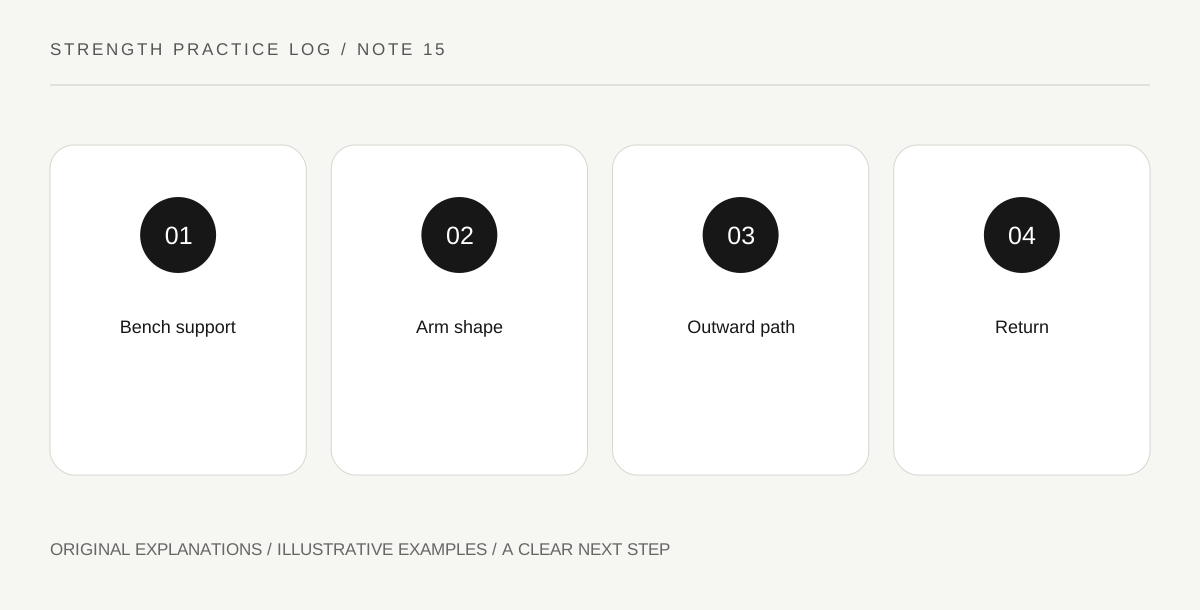
Original explanatory diagram. Read the full method and limitations below.
Arrange support on the actual bench
ACE's reference places the torso against an inclined bench with the feet supported on the floor. Ask which bench position and body placement suit the instructed exercise. The published illustration is not a universal adjustment for every person or bench. Make sure the equipment is appropriately secured and use the demonstrated entry and exit. A loose bench or an improvised support changes the task before the arms even move.
Understand the starting arm shape
The arms hang below the shoulders with a slight elbow bend in the reference. Learn that shape and hand orientation before starting the outward movement. A soft elbow bend is different from repeatedly bending the elbows to pull the dumbbells toward the ribs. Ask the instructor to demonstrate the distinction if the reverse fly feels indistinguishable from a row. Names are useful only when they correspond to a recognizable movement task.
Raise outward without replacing support with arching
The arms travel outward while the chest remains supported. Observe whether the torso lifts away from the bench or the head rises to help the dumbbells move. The appropriate endpoint should come from instruction, rather than a demand to lift beyond shoulder level. If more height requires a different body movement, describe that change. Do not assume it proves that the shoulders need a stronger contraction or a heavier weight.
Lower along the same understood path
Return the arms deliberately to the starting arrangement. Dropping the weights changes the lowering phase and makes the next start less consistent. Record the bench arrangement, arm shape and the point where the movement became unclear. These details help an instructor separate setup, path and resistance questions. They also distinguish the exercise from an unsupported bent-over movement that may appear nearby in a program but has different support demands.
Illustrative worked example
Illustrative lesson: A learner begins bending his elbows strongly as the dumbbells rise. The instructor demonstrates the outward reverse-fly path and compares it with a separate supported row. The learner records the arm-shape difference and notes when chest contact changes. The fictional lesson reports a clearer question, not a measured performance gain or a prescribed bench angle for every reader.
Questions that come up
Is every chest-supported dumbbell exercise a reverse fly?
No. Support alone does not identify the exercise. Direction and elbow action also matter, so ask for the actual variant.
Should I lift higher by arching away from the pad?
That changes the supported movement. Use the appropriate instructed endpoint instead of adding torso movement to obtain more height.
References and scope
These sources support the factual background. Examples and exercises are original illustrative teaching material. References do not imply endorsement.
- ACE Incline Reverse Fly — Chest-supported reverse-fly movement.