Understand the elbow pads on a lateral-raise machine
A lateral-raise machine may transmit the movement through pads near the elbows rather than through a dumbbell held in each hand. Learn how the actual device is meant to contact the arms. Its seat, pad and start arrangement determine what the exercise asks you to move.
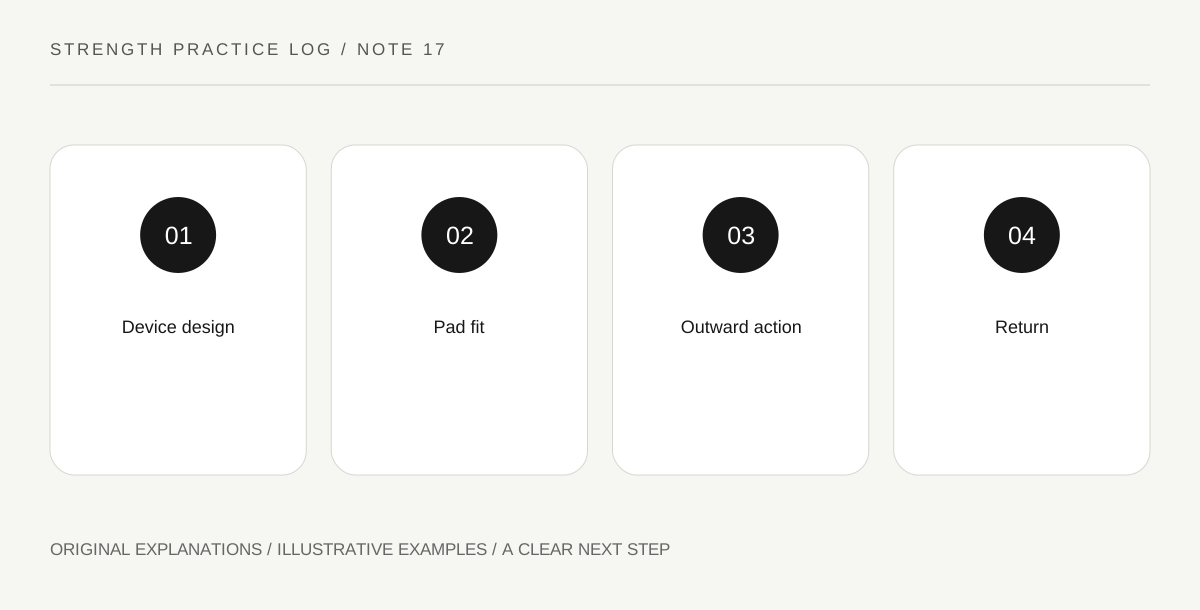
Original explanatory diagram. Read the full method and limitations below.
Identify the machine instead of guessing from its name
ACE's reference shows a seated device with pads positioned just above the elbows. Other machines may use handles or a different support layout. Ask qualified staff to identify the intended contacts and adjustments. Do not assume a familiar exercise name means the same setup. Note the actual device so the next visit can reconstruct the lesson or recognize when you are using a different design.
Fit the pads to the instructed arm position
In the reference, the elbows are bent and the upper arms contact the pads. Ask how the seat and pad relationship should be arranged for you. Reaching the handles is not the only relevant fit check. If a pad presses in an unsuitable place or the intended position cannot be maintained, seek another demonstration or an appropriate alternative. Avoid solving an equipment-fit problem by forcing the shoulders into a different starting position.
Move outward through the intended contact
The exercise raises the upper arms outward by pressing through the elbow area against the pads. Distinguish that action from pulling on the handles or moving the entire torso sideways. Observe whether the same contact remains understandable through the selected range. An instructor can clarify the endpoint and suitable resistance. The visible travel of the machine's lever should not become a demand to reach its absolute limit regardless of the user's position.
Control the inward return
Bring the arms back deliberately according to the machine's path and taught resting position. Do not let the resistance slam the pads inward or assume the handles will stop the motion safely without instruction. Learn how to finish and exit the device. Write pad placement, the outward action and the phase where contact changed. Those details make the notebook useful even when a later machine labels its adjustments differently or uses a different lever arrangement.
Illustrative worked example
Illustrative equipment question: A beginner sits on a lateral-raise machine and notices the pads meeting the forearms rather than the demonstrated upper-arm area. He asks staff to adjust the setup and explain the intended contact. Later he records that the return needs more attention than the outward movement. The example describes learning the device, without setting universal seat numbers or claiming a training outcome.
Questions that come up
Can I pull hard on the handles to move the lever?
Ask which contact is intended to drive the movement on that device. In the reference, the outward action is transmitted through the elbow pads.
Does reaching the handle prove the seat fits?
No. The arm-to-pad relationship also matters. Ask staff to review the complete setup on the actual machine.
References and scope
These sources support the factual background. Examples and exercises are original illustrative teaching material. References do not imply endorsement.
- ACE Lateral Shoulder Raise — Machine lateral-raise action and return.