Break a forward lunge into step, lower and return
A forward lunge combines balance, a step and a controlled lowering action before returning to standing. Those phases can become blurred when the movement is rushed. Learn a suitable unweighted version with qualified instruction and separate the phases so the next question can address a specific action.
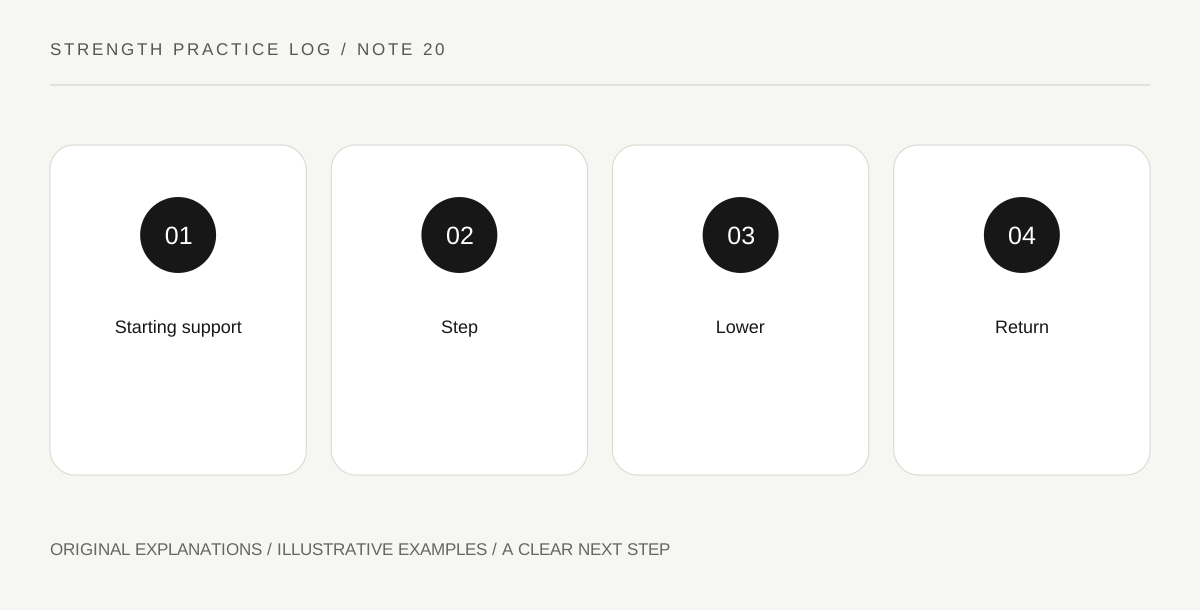
Original explanatory diagram. Read the full method and limitations below.
Prepare for the change in support
ACE's reference begins standing and lifting one foot before stepping. An instructor can assess whether the balance demand and version are suitable. Do not treat losing balance as a challenge to repeat without support or modification. Learn the appropriate starting stance and where the practice can take place safely. The lesson should have enough clear space for the planned step and return without other users or loose equipment entering the route.
Place the step deliberately
The forward foot changes where the body is supported. Ask about an appropriate step length and contact for your version rather than copying the longest stride visible in a video. A long step is not automatically more advanced or more useful. Observe whether the foot lands where intended and whether the transition is controlled. If that phase is unclear, discuss it before combining it with a deeper lowering movement or external resistance.
Lower rather than simply driving forward
ACE distinguishes lowering the hips from thrusting them forward. Learn the instructed relationship of the torso, hips and legs through a suitable range. Do not force depth or use discomfort as a target. The task is easier to discuss when you can name whether the difficulty appears during the step, the downward phase or the transition out of it. A general statement that lunges are difficult gives the instructor less information.
Return as part of the same exercise
The front leg helps return the body to the starting position in the referenced movement. Learn that transition deliberately, including where the feet finish before the next action. Record the version and the phase question without prescribing extra practice on a side based on one observation. A lunge with added resistance or another direction is a separate progression decision. It should not be introduced merely because the forward step can be completed once.
Illustrative worked example
Illustrative lesson: A beginner notices that his step is deliberate but he moves the hips forward when trying to lower. He asks the instructor to review that phase and records the return as a separate task. The note names an unweighted forward lunge and the practice space. It does not prescribe stride length, depth, repetitions or an unsupported balance challenge for other readers.
Questions that come up
Should I use the longest step I can reach?
No. Learn a suitable step for the instructed version. Maximum stride length does not establish an appropriate movement.
When should I add dumbbells?
That depends on the person and exercise context. Discuss progression with a qualified instructor rather than adding resistance because one unweighted attempt was completed.
References and scope
These sources support the factual background. Examples and exercises are original illustrative teaching material. References do not imply endorsement.
- ACE Forward Lunge — Forward step, controlled lowering and return.