Make the front raise a deliberate forward arm path
A dumbbell front raise moves the arms forward from their starting position. The long arm path makes changes in wrist, elbow and torso position easy to overlook. Learn a suitable version with qualified instruction and use the notebook to distinguish those actions instead of judging the exercise by height alone.
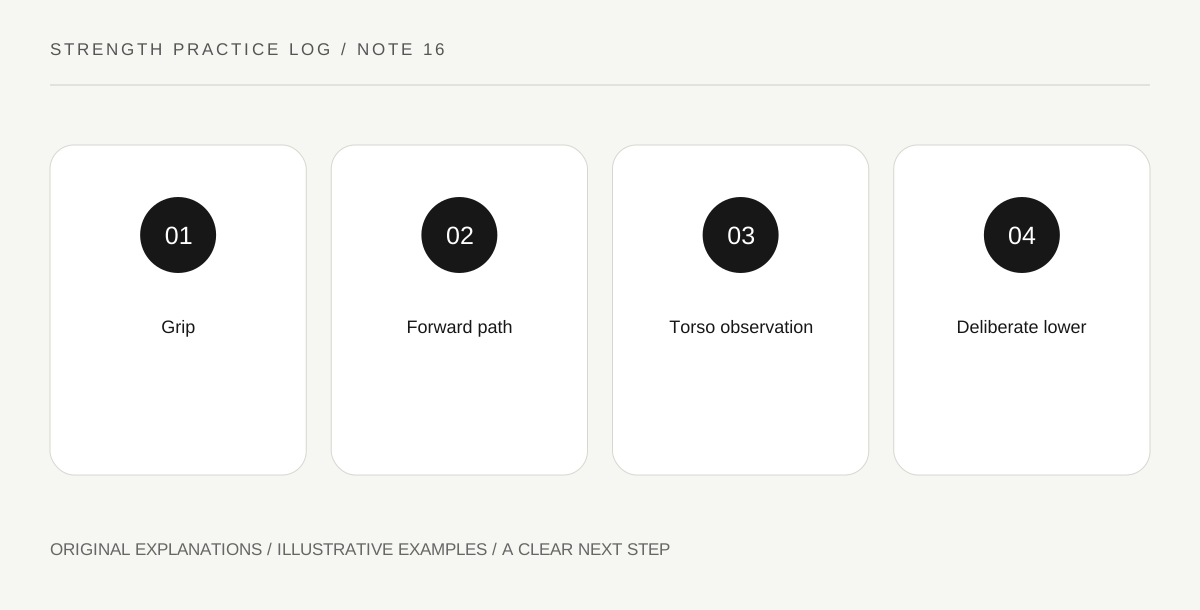
Original explanatory diagram. Read the full method and limitations below.
Identify the demonstrated grip and stance
ACE's reference begins with dumbbells near the fronts of the thighs and an overhand grip. Ask the instructor to show the intended standing arrangement and hand orientation for your version. Other shoulder exercises may begin beside the body or use a different grip. Recording those differences prevents a later note from collapsing several movements into a generic shoulder raise, which gives little information about what was actually practised.
Move the arm as the instructed unit
The raise involves the upper arms and elbows moving forward with the dumbbells, rather than a wrist flick that sends the handles upward. Keep the wrist relationship clear and use the elbow shape you were shown. Ask about the intended path if the arms rotate during the version being taught. A small detail seen in another demonstration should not be added automatically when it changes the task you are currently learning.
Keep the standing body from launching the weight
Observe whether the movement begins with a hip thrust, a backward lean or a sudden body swing. These actions can move the dumbbells while changing the intended controlled raise. Describe the exact phase to the instructor. The answer may concern the chosen version, range or resistance, but a notebook observation alone cannot establish a diagnosis or a universal correction. Stop if the movement causes pain rather than treating discomfort as evidence of useful shoulder work.
Give the lowering its own attention
Return the dumbbells deliberately along the learned path. The lower position should be a controlled finish, not a collision with the thighs that launches the next attempt. Record where the torso or wrist changed, and whether it happened on the way up or down. This gives a specific question for the next demonstration. A higher dumbbell endpoint is not automatically a better result when the body arrangement changes to reach it.
Illustrative worked example
Illustrative practice note: A learner can describe the forward path but notices a backward lean near the top. He asks the instructor to review the selected range and resistance. His notebook names the overhand front-raise version and records that the change appeared during lifting, while the return stayed deliberate. The example does not prescribe a resistance, endpoint angle or repetition count for another person.
Questions that come up
Is the highest possible raise always the goal?
No. Follow the appropriate instructed path and endpoint. Extra height obtained by changing the torso does not represent the same task.
Can I treat all shoulder raises as one exercise entry?
Use distinct names and starting details. Forward, outward and supported movements can have different paths and demands.
References and scope
These sources support the factual background. Examples and exercises are original illustrative teaching material. References do not imply endorsement.
- ACE Front Raise — Dumbbell front-raise action and control.